Braddell’s School Mural: What a Singapore Landmark Can and Cannot Tell You
If you saw the glass mosaic along Braddell Road without its label, you might assume the school beside it commissioned it. But an artwork can outlast the school buildings around it and can be moved. Singapore’s National Heritage Board records that the mosaic was originally outside the former Westlake Primary School’s assembly hall and later relocated to the roadside near Raffles Girls’ School. For a Secondary History exercise, use the mosaic to separate three questions: What does it show? Who put it there, and when? What happened to it after the site changed?
Start with a detail, not a grand conclusion
Open the National Heritage Board’s Roots entry and look at the image or the description. Select a detail you can identify without guessing, such as a cable car or the river. Set up two columns: “What I can see” and “What an independent record says it is”. You might see a small cabin hanging from a line; the Roots description identifies cable cars among the landmarks depicted. The two statements work together, but they do not come from the same place. If a figure is too small to identify, write “not clear in this image” instead of filling the gap from memory.
National Heritage Board: The History of Development in Singapore glass mosaic
The mosaic puts several views of Singapore together in a single artwork. It is not a photograph of one street taken from one camera position. If you placed the river and the cable cars next to each other on a diagram merely because they are near each other in the mosaic, you would be treating a composition as a map. Likewise, an ordinary activity missing from the artwork was not necessarily absent from Singapore. The artist selected what to show; the image cannot give a complete account of life at the time.
Keep the mural’s dates and the schools’ dates apart
Roots dates Ho Cheok Tin’s design to 1979. The Ministry of Education Heritage Centre records that Braddell-Westlake Secondary School was formed in 2000 and later featured the mural. It also records that the secondary school merged with Guangyang Secondary School in 2006. These dates describe different things. The 1979 date is about the design; 2000 is the formation of a named secondary school; 2006 records a later merger. None of them automatically tells you the exact day the wall was moved.
Write those entries on separate slips, each beginning with a verb such as “designed”, “formed”, “merged” or “relocated”. If you cannot verify a date for an action, leave that slip undated. It is still possible to explain that the mosaic moved after its earlier setting changed without guessing a year. Also keep the former primary school and the merged secondary school distinct in your notes; the similar names are a reason to check, not a reason to combine their histories.
Write a claim the evidence can support
Try this as a conclusion: “The mosaic selected landmarks to represent Singapore’s development. Its current roadside position tells a later story about what happened to an artwork after the school site changed.” Below that, add one unresolved question. For example, “What did pupils notice about it when it was beside the assembly hall?” Neither the mosaic nor the date alone can answer that. A pupil’s recollection, a school magazine or a dated photograph might help, though each would still reflect a particular moment or viewpoint.
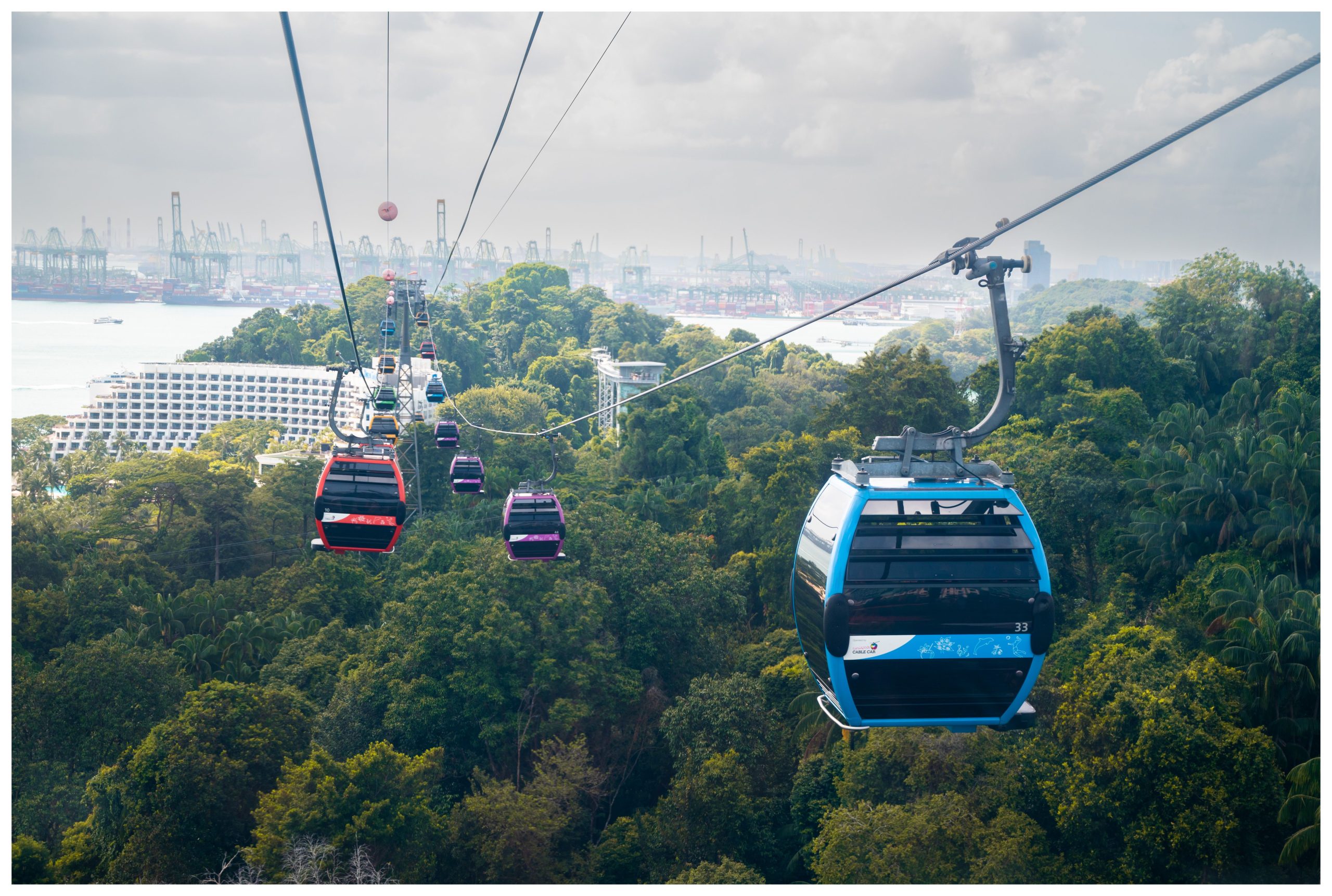
If you want a quick self-check, turn one sentence into a label for a museum display. Include one observation, its source and one limit. Avoid using a current photograph of a cable car as if it depicts the 1979 mural itself; it can illustrate the subject, but not supply an original view of the artwork. Separating the image, its source and the inference is the part of this activity you can use again with other Singapore heritage objects.
As a second check, ask a classmate to highlight any sentence that starts from the mosaic but ends by claiming what all Singaporeans thought. Either make the claim narrower or add evidence from people who were there.