On a Chek Jawa school visit, one group might report three crabs while another reports none. That does not necessarily mean the first group found a better habitat. They may have watched longer, looked at a wider patch or visited when more mud was exposed. A timed wetland observation helps Singapore secondary students make their field notes easier to compare. The aim is to count what was visible within a defined patch and interval, not to estimate how many animals live across the reserve. You can practise from an authorised boardwalk viewpoint or with a prepared photograph or video in class.
Choose a boundary before looking for wildlife
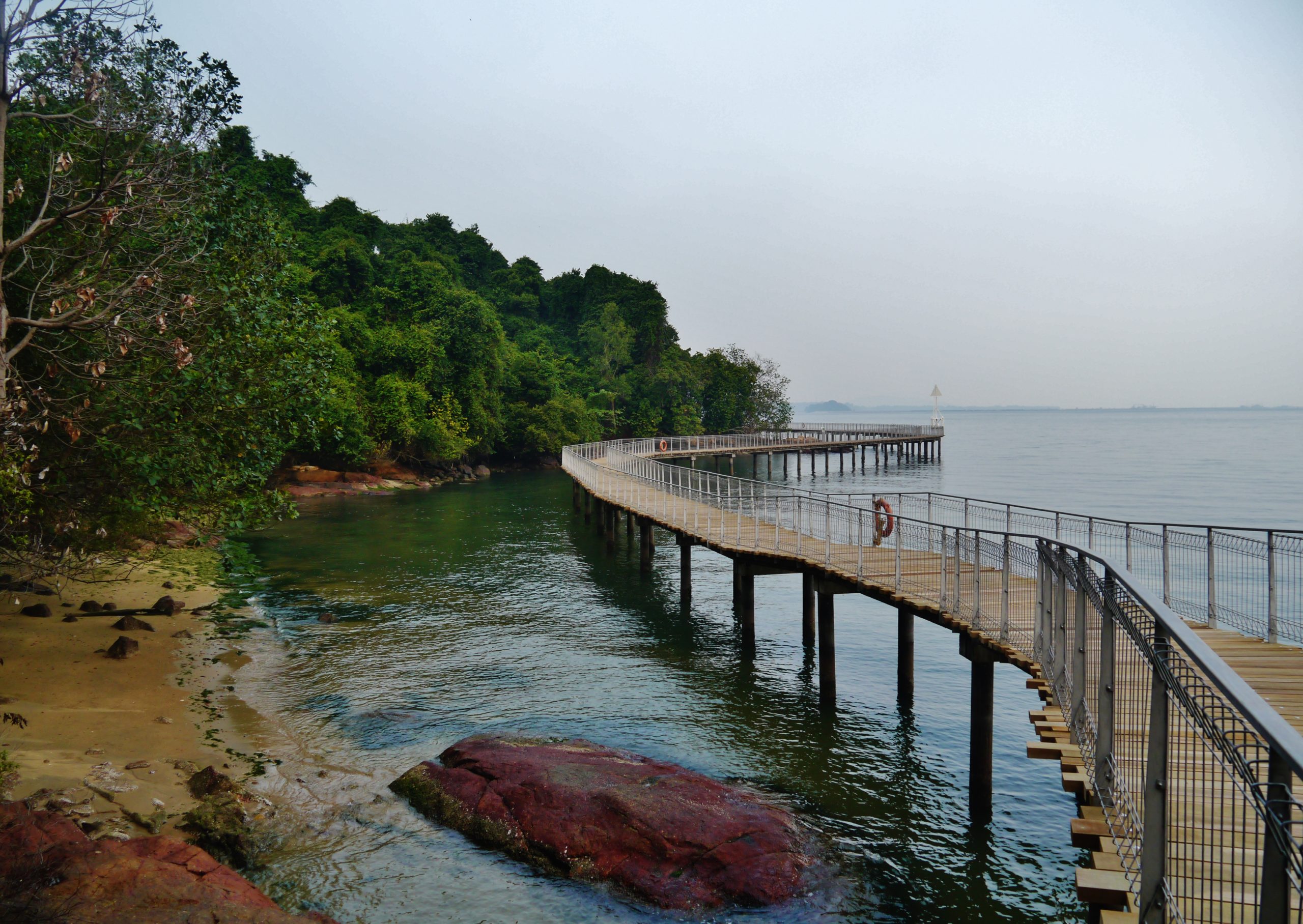
Visit only an open, designated viewing area with your school or family, follow signs and stay behind railings. Before a trip, check the latest Pulau Ubin notices from NParks rather than assuming every boardwalk section is open. Never step onto the mud, lean over a rail or move rocks to look underneath. In class, a teacher can show a still photograph to rehearse finding a boundary, then use a video for the timed count. The procedure is the same: choose the patch before you know whether it contains anything interesting.
Look for two fixed landmarks within view, such as a root at the left and a pale stone at the right. Sketch a small area between them. Give the near and far edges a boundary too, using marks that a partner can identify. It is a viewing patch, not a measured square metre unless you have independently established its dimensions. Write down the place, observation time and whether the patch is dry, partly covered by water or mostly hidden. If the water covers the area or glare makes it impossible to see, record “not observable”, not zero.
Count the greatest number visible at once
Choose one thing you can recognise from where you stand, such as small moving crabs, without trying to give each animal a species name. Watch for two minutes. To avoid counting the same crab again when it comes out from behind a root, record the highest number you see at the same time. If you see one at 20 seconds, three together at 45 seconds and two later, the record is a maximum of three visible at once. It is not a total of six, and it does not show that precisely three crabs live in the patch.
Take turns being the observer and the recorder. If a second observer stands at the same place, agree on the boundaries and timing first, then compare notes. One learner may say they saw movement they could not identify. Give uncertainty its own note instead of rounding it up to “one crab”. A clean field record might say: “Patch left of the pale stone, watched two minutes, maximum two visible at once, one unclear movement behind the root.” These details make the count useful to a classmate who was not there.
Explain what a difference might mean
Suppose Patch A gives a maximum of four and Patch B gives one. Before arguing that A contains more crabs, check whether the two patches were similarly visible. If B was under shallow water or its surface was broken up by reflections, the difference could come from how easy the animals were to see. Even two equally visible patches may differ because the animals were moving at different moments. Repeat the observation on another suitable occasion and record any changes in conditions instead of trying to force the same outcome.
For a short write-up, use one sentence for the method, one for what you saw and one for a limitation. If your class cannot visit Chek Jawa, use two comparable video clips and label the source and time window for each one. The same rule applies either way: count only within your chosen patch and say what your count represents. That is what turns a field-trip sighting into an observation another person can understand and check.