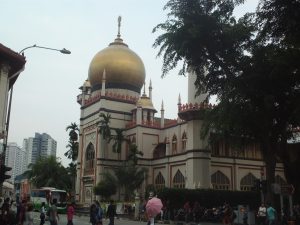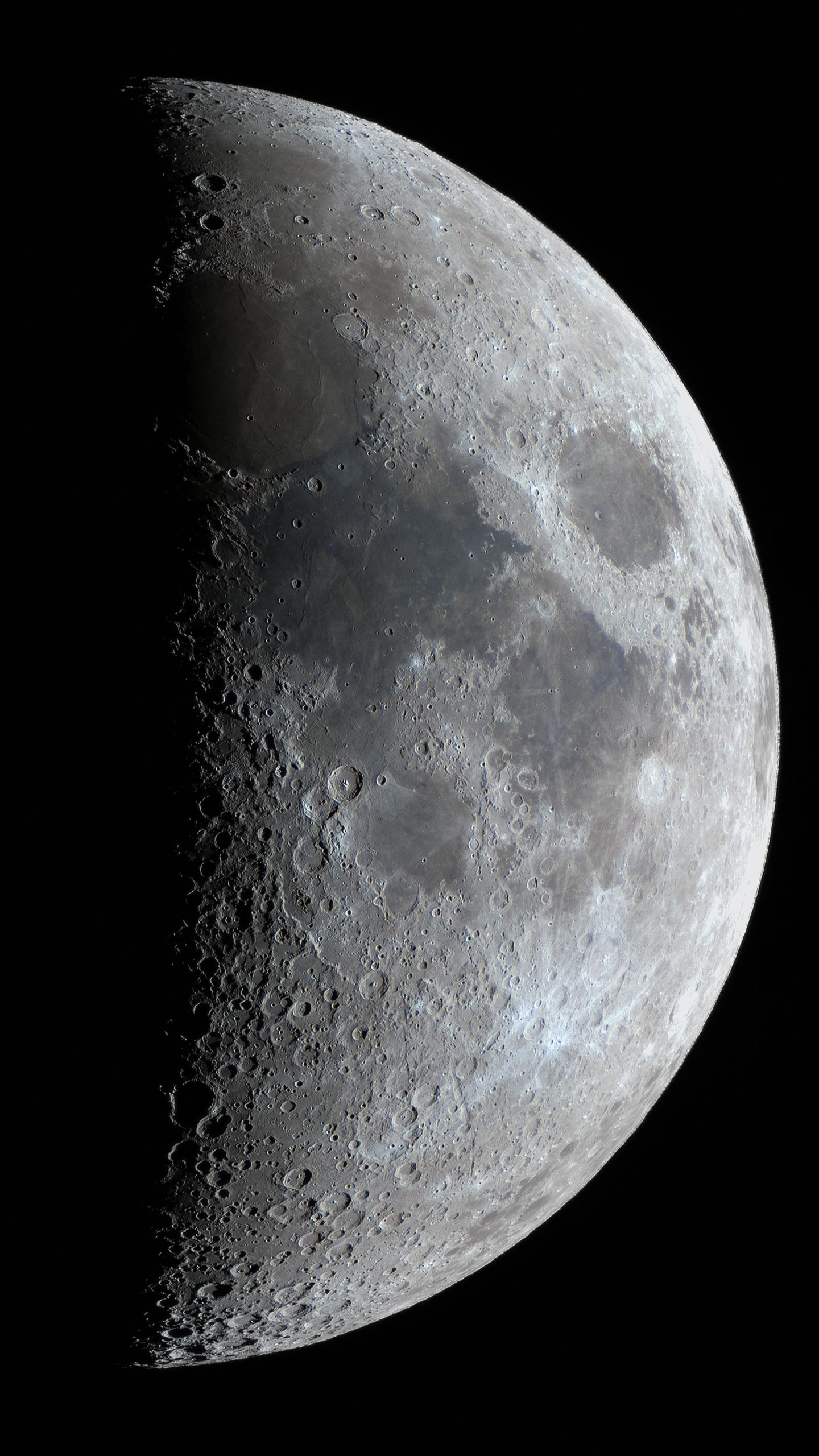
A bright full Moon above an HDB estate looks like the obvious time to search for craters. Yet a partly lit Moon can make the relief of some craters much easier to see. The key is not that the craters change between evenings. It is that sunlight reaches the visible surface at a different angle. This Moon crater observation activity gives Singapore students a way to investigate the difference using a torch, a simple paper model and, if the sky is clear, a short evening observation. You do not need an observatory, a telescope or a clear horizon in every direction.
Make a model that stays still while the light moves
Put two sheets of white paper on a table. Leave one flat as a comparison and place a shallow ring made of white card on the other. Tape down the ring so it does not move, and keep the ring low enough that you can see its interior from above. It is a model of an uneven rim, not a model of how an impact makes a crater. Use a small torch in a dim room. Keep the torch away from eyes and choose a table that is easy to reach without turning the room completely dark.
Look down from the same spot while a partner shines the torch from high above the card ring. Draw where the rim is easiest to see and whether there is a dark patch inside it. Then move the torch so it shines almost sideways across the paper, making the light meet the tabletop at a shallow angle. Keep the torch roughly the same distance from the ring while changing its angle. Sketch any change in the shape and length of the dark patch. Tilt neither the ring nor the sheet. If the ring moves, you cannot tell whether a new shadow came from a lighting change or a change in the model.
Look for contrast, not just brightness
A possible result is that the overhead beam lights most of the inside of the ring, while the lower beam leaves a longer dark patch behind one side of the rim. The flat sheet should not show that same rim-shaped shadow. If your setup gives little contrast, check whether another lamp is filling the shadows and whether the torch is low enough. Moving it closer may make the paper brighter, but that alone does not test the angle. Ask your partner to shine it from the opposite side at the same low angle. The shadow should switch sides if the change really depends on the direction of illumination.
The Moon’s boundary between the sunlit and dark portions is called the terminator. Near the boundary, sunlight reaches the surface at a shallow angle, and uneven features can cast long shadows. NASA’s Moon viewing guide recommends looking near that boundary to see surface relief. The model illustrates the lighting effect; it cannot tell you the height of a real crater rim, the depth of a crater or which named feature appears in a photograph.
Make an evening sketch even if you cannot identify a crater
From a safe, open ground-level spot, such as a courtyard, look for the Moon during an evening when it is above buildings. A partly lit Moon is a good starting point, but clouds and surrounding buildings can block the view. Do not lean out of a window or use binoculars to search near the Sun. If you can see the Moon without equipment, sketch its overall bright shape and mark where bright becomes dark. You may not see any craters with the naked eye. Use a published lunar photo if the ground-level view is unclear, and label it as a photo rather than a personal observation.
End with one description and one explanation. For example: “In the low-angle trial I saw a darker patch behind the rim. The shallow beam left part of the surface in shadow.” A learner who writes “The crater got deeper” has changed the wrong thing. In the tabletop model, the ring stayed the same. The lighting made its relief stand out.