Secondary English Literature: Try Two Readings of the Same Line
When two classmates disagree about a character, the useful question is not “Who sounded more convincing?” It is “Which words or stage directions make that reading possible?” A line of dialogue on the page may sound different in performance without changing a word. This short exercise for Secondary English Literature starts with a scene in a Singapore school, keeps the written lines fixed, and gives students a way to test two readings before writing a paragraph about either of them.
Keep the lines fixed and change one decision
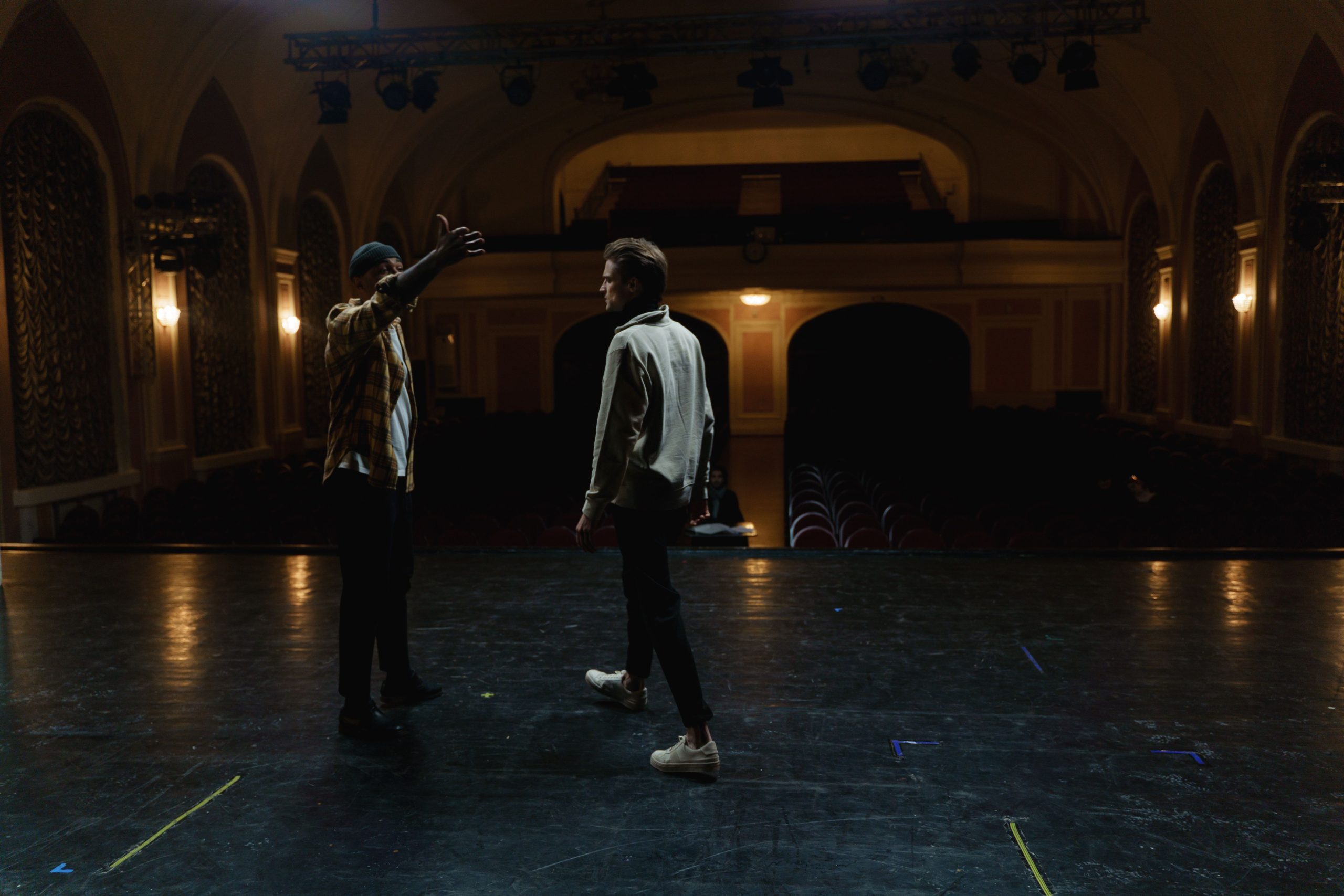
Here is an original scene. The class has just finished making an exhibit in the school hall. The hall is nearly empty. Dev is holding a cardboard model. Farah stops by the exit and says, “You can leave it here.” The script says that Farah stays at the doorway. Dev looks down at the model. There is no other stage direction about tone, expression or where in the hall the model belongs.
First, read Farah’s line as reassurance. Decide that she notices Dev has his hands full: say it at an ordinary pace and give him time to answer. For the second reading, keep the same words and position, but stress “here” sharply. The second version can sound like an instruction to stop carrying the model any further. You do not need actor training or an audience. A partner reading both versions at a desk is enough. To make the comparison useful, change one thing at a time. If you also invent a glare and a shout, you will not know what made the line sound different.
Separate what you heard from what the text says
Make two columns. In the first, write “On the page”. Put in Farah’s actual line and the fact that she remains in the doorway. In the second, write “In my performance”. Put in the pause or the emphasis you added. A sharp stress on “here” may show what an actor could do, but the script does not command it. Do not describe it in an essay as if it is an instruction from the playwright.
Now test which details support each reading. “Can” leaves open the idea that Dev has permission rather than an order. In contrast, the short line and the pointed choice of a location allow an interpretation where Farah is directing where the object should go. Her staying in the doorway could fit someone who plans to leave, but it does not prove she is impatient. The exercise is not to make every interpretation equally strong. It is to see which conclusions go further than the script allows.
Write one claim and show its limit
Try a brief paragraph: “Farah’s instruction may be reassuring rather than demanding. The word ‘can’ sounds permissive, and the stage direction does not say she approaches Dev or takes the model from him. However, her brief line leaves room for a firmer reading if the speaker stresses the location.” That paragraph does not merely retell the scene. It names a word, explains its possible effect and acknowledges what cannot be settled from the printed lines alone.
For a follow-up, write one alternative stage direction that would strengthen the other reading, such as a direction telling Farah to block the exit. Mark it as your addition. Then reopen the original script and point out that the existing text only has her stay by the doorway. You have created a useful test of the difference between a choice you made and evidence you were given.
Transfer the exercise to a scene assigned in class. Choose one short line and check what happens immediately before and after it. Those surrounding details may give one reading more support than the other. Try saying both versions, but build the final written claim from the play itself, not from whichever reading made your partner laugh or sounded most dramatic.
If the passage actually says the character whispers or moves away, include that direction. It carries more weight than a gesture you introduced to see what might happen.