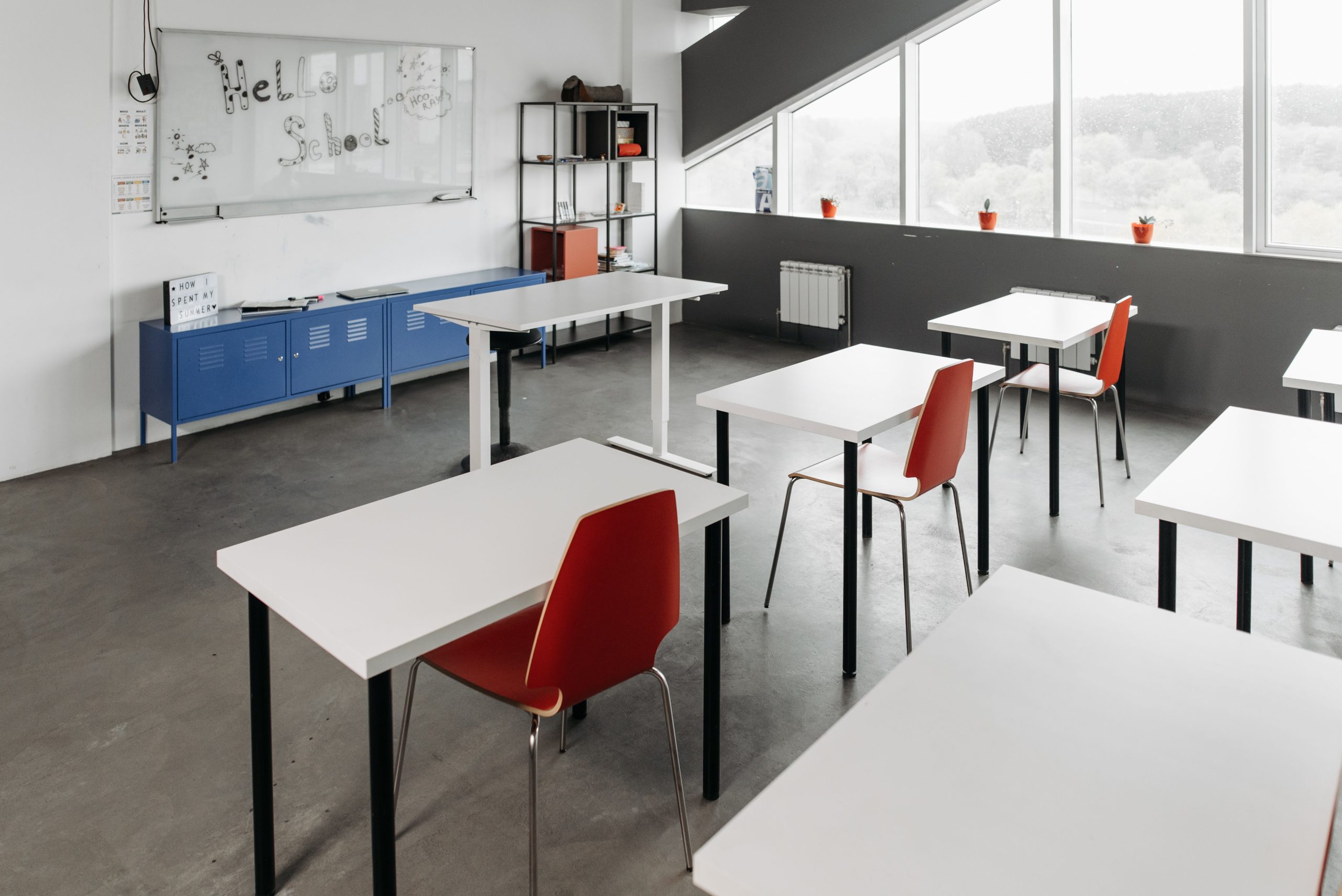
When a Singapore secondary class moves tables for group work, check whether students can get to a place, use the materials and follow the discussion once everyone sits down. A layout can look open in an empty classroom and still block someone when school bags are under the chairs. Test it with one actual task before using it for a full lesson. What matters is not whether the tables form a circle, but whether everyone can take an active part from their place.
Choose a group task that needs shared material
The Straits Times reported in 2024 on school plans for more flexible furniture and improved access, with examples including group layouts in a rebuilt Bendemeer Secondary School library and flexible furniture trialled in some classes at Montfort Secondary School. These examples do not tell you which furniture or routes are available at your school. Start from the room and student group you have, and get approval from the teacher before rearranging anything.
Imagine four Secondary 3 students comparing two extracts for a social studies discussion. They need to look at the extracts, point out one piece of evidence and record what their group agrees about. Simply turning all four chairs towards each other may leave the extracts under somebody’s arm or behind a laptop screen. Put down only the items that the activity needs, including an accessible copy if a learner uses one. Then ask students to show where they would enter, sit and put their materials.
Check the route at the busiest point
Before moving furniture, ask the teacher which routes and doors must stay clear. Don’t test a route by having a pupil with a mobility aid take an unsafe turn. Observe with the learner’s agreement as they use their normal method, or ask them to explain where they need room. Account for chairs being occupied, not just pushed all the way in. Notice whether reaching one seat means asking several people to stand up every time someone needs to leave.
Try two changes separately. First clear bags from a permitted route. Then, only if the teacher agrees, see what happens when an unused chair moves elsewhere. A marked clear path does not help if the only usable place is separated from the group. Ask where the student wants to work and how they can see the shared material. Avoid assuming the same seat works for everybody who needs access.
Test whether group members can share a piece of evidence
Ask each student to identify one line from the extracts. A student at one end may not see the small print when someone holds a page up. Another may be able to read the page but not access it again once it is passed across the table. Try keeping the copies in a consistent place or giving people usable copies of their own. If the class works digitally, check that the approved shared material opens before treating the layout as solved. The access problem might be a file or a sightline, not a shortage of desks.
Once students have the extracts, ask them to read back the group note. Can each person tell whether their point has been included? If not, make the note available in a form people can use, or have the group check it one point at a time. If a student says there’s too much conversation from the next group to follow theirs, ask whether spacing or adjusting turn-taking helps in that room. Do not fix the furniture while leaving the work inaccessible.
Leave a simple setup the next group can repeat
Record which path stays clear, where copies go and where students can make a point without turning away from the discussion. Check that the arrangement works when the room is used again and that it can be reset safely. If one barrier persists, pass it to the teacher with the actual moment it occurred. The test is successful when students can reach their place, work with the same evidence and find out what the group decided.