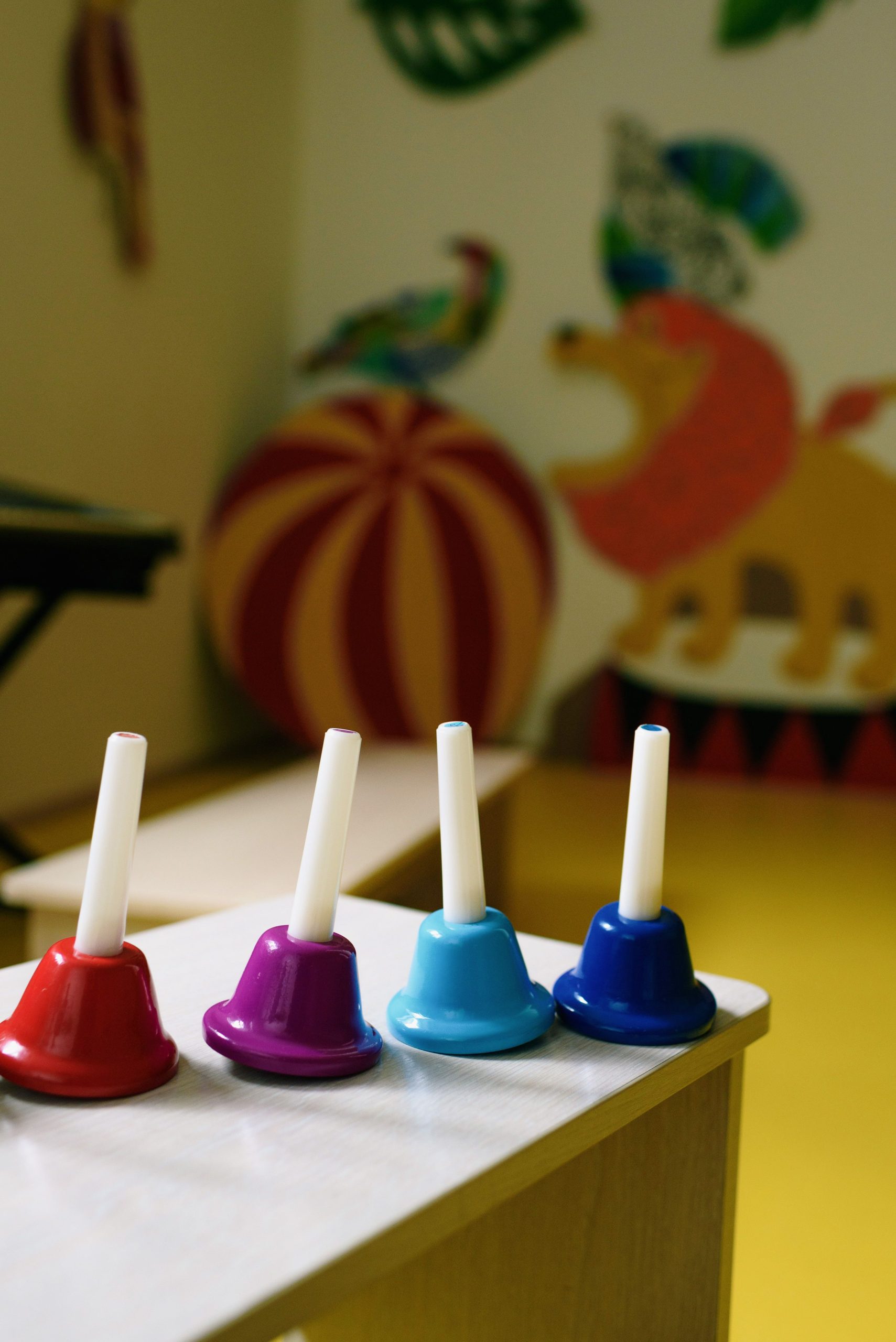
Give the handbell players and the artists one moment to meet
A school concert brings together a handbell group and a visual arts CCA. Each can perform its own piece, but a joint rehearsal reveals a problem: the picture changes before the bells arrive, or the players start and nobody looking at the artwork knows why. Rather than timing the whole show immediately, pick one visual change and one short musical entrance. The Straits Times covered a 2018 Singapore Youth Festival concert at the Esplanade that paired student sand art with handbell performers from several schools. The exercise below is an independent way to rehearse a small shared moment, not a description of that concert’s preparation.
Choose a change both groups can recognise
You could use two school-approved illustrations, held by a visual team on separate boards. The first shows a quiet path; the second changes the sky. Select an approved phrase that the bell players already know rather than asking them to learn a new piece while they are solving timing. Both teams should be able to name the moment in plain language: “When the second board is steady and facing the audience, we are ready for the music.” Being ready is not necessarily the signal to play. That distinction gives both teams room to deal with a board that is still being positioned.
Ask the supervising teachers to identify who sends the agreed start cue, where the artwork can be seen, and which students can see the cue from their practice positions. Offer a large visual cue, a spoken cue or another agreed signal based on students’ actual access needs. Don’t infer from someone’s school or role what support works for them. Try one primary cue first. If two adults give it at different times, the group may split even though everyone followed an instruction.
Test the interface without instruments first
Set up the artwork and ask the musicians to show they have seen the cue with an agreed quiet response, such as making a mark on a test card. The art group can hold the second view steady rather than attempting the full display. Ask a student observer to note whether the artwork was in position before the cue went out, and whether everyone saw or heard that cue. The observer’s note should describe an event, not label another student as slow or inattentive.
Test a harmless interruption. Have the art lead announce in advance that they will wait one extra beat before setting the board in place. Can the music group wait for the cue rather than following the same delay it learnt in the previous run? If a music stand or an audience member would block the cue, flag the issue to the teachers. Don’t move anyone’s instrument from its approved position just because the paper plan looked more symmetrical.
Listen once at the level of a whole audience
In the assigned room with teacher approval, try the short musical entrance at a comfortable volume. Put the listener where there is an unobstructed view and ask what changed first. If they heard the bells but did not see the artwork, the issue may be spacing or sightlines rather than playing. If they saw the artwork and forgot why the music was waiting, shorten the silent interval or make the visual change easier to notice. Ask teachers to manage sound levels and any adaptations; students need not increase volume to attract attention.
Leave one record each team can use separately
Write the cue, who gives it, what both groups are waiting for, and what happens if the cue does not arrive. A sketch can help if the text “on the left” changes meaning for the two teams. Save a copy with staff rather than relying on private recordings of other students. In the next practice, let each group set up their part and bring it together once. If both groups can say where the artwork is, what the music is waiting for and how to reset, they have built a small collaboration that doesn’t depend on everybody already knowing the whole show.