Let two students make different drawings of the same leaf
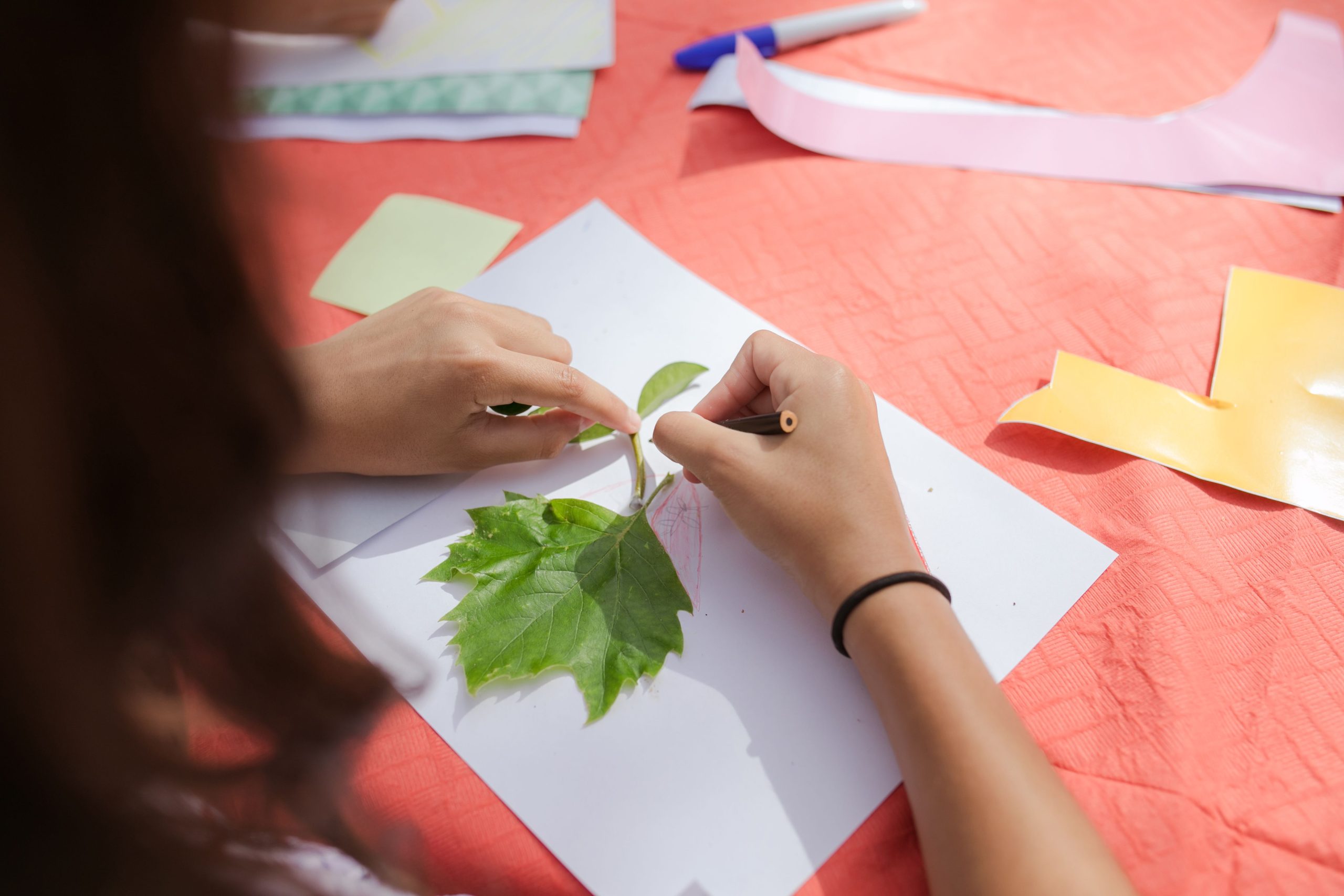
When a school art group makes a shared nature display, some pupils end up copying a reference picture because the group wants everything to match. Try the reverse: choose one ordinary leaf shape and ask two students to make different interpretations of the same visible feature. The Straits Times reported that the Trainforest public art project near Kembangan MRT drew on neighbourhood plants, with artists and MINDS Towner Gardens School students contributing their own interpretations. This classroom exercise builds on the idea of looking closely, not on copying the display or proposing a real artwork for the MRT.
Choose a shared observation, not a shared answer
Use a teacher-approved photograph, a drawing already cleared for the lesson, or a safely observed plant in an assigned school area. Nobody needs to pick leaves, reach through a fence or stand beside traffic. Write one feature everybody can check: a line branches towards both sides, the edge bends inwards halfway up, or the tip is much narrower than the base. If the plant’s name isn’t confirmed, it’s enough to say “leaf from this reference”. An invented title can belong to the artwork without becoming a label about the plant.
Offer different ways to notice the line. One student can trace it on a working copy, another could describe it to a partner and someone else might use a large print. Don’t assign a method to people based on a diagnosis or ask students to talk about their support needs in front of the group. Ask what format makes the feature easier to inspect. A shared observation doesn’t require everybody to represent it in the same way.
Change what you emphasise, not what you claim to have seen
One person might turn the branching line into a path through a fictional garden. The other might use the same branching pattern to give an invented character a coat. Ask both to keep one marker in the drawing so a viewer can see the connection with the reference. That might be a blunt tip, a small notch or a branch that curves in a particular direction. A caption can identify the observed feature first, and then introduce what’s invented. Separate the two rather than suggesting the reference plant really has a door, a walkway or a character hiding underneath.
Build a pair of drafts at the same scale so neither one takes up the whole display. A group member can propose an arrangement, but check with each illustrator before cropping or changing their work. Preserve the two small drawings even if the art team later combines parts into a collage. A shared theme is not the same as giving someone permission to edit or post your image.
Find out what a visitor can connect
Give a first-time reader the reference and the two interpretations. Ask them to point to the feature carried into each one. If they find the link in one but not the other, add a short label rather than asking both illustrators to make their work more realistic. If several readers look for two different plants, confirm the heading tells them the two drawings began with the same observation. Use large, readable text and explain the fictional additions without spoiling everything a reader might imagine.
Leave room for one new interpretation
In the next session, let a student who did not make either picture contribute a third version using the same observed feature. Check that the layout can accept it without making the earlier work unreadable. The display doesn’t need public space, a competition or commercial materials. A clear classroom version should let you find both where the students started and where they made different choices. That’s a more useful outcome than requiring the class to produce matching leaves. Ask what students would notice differently after looking again.