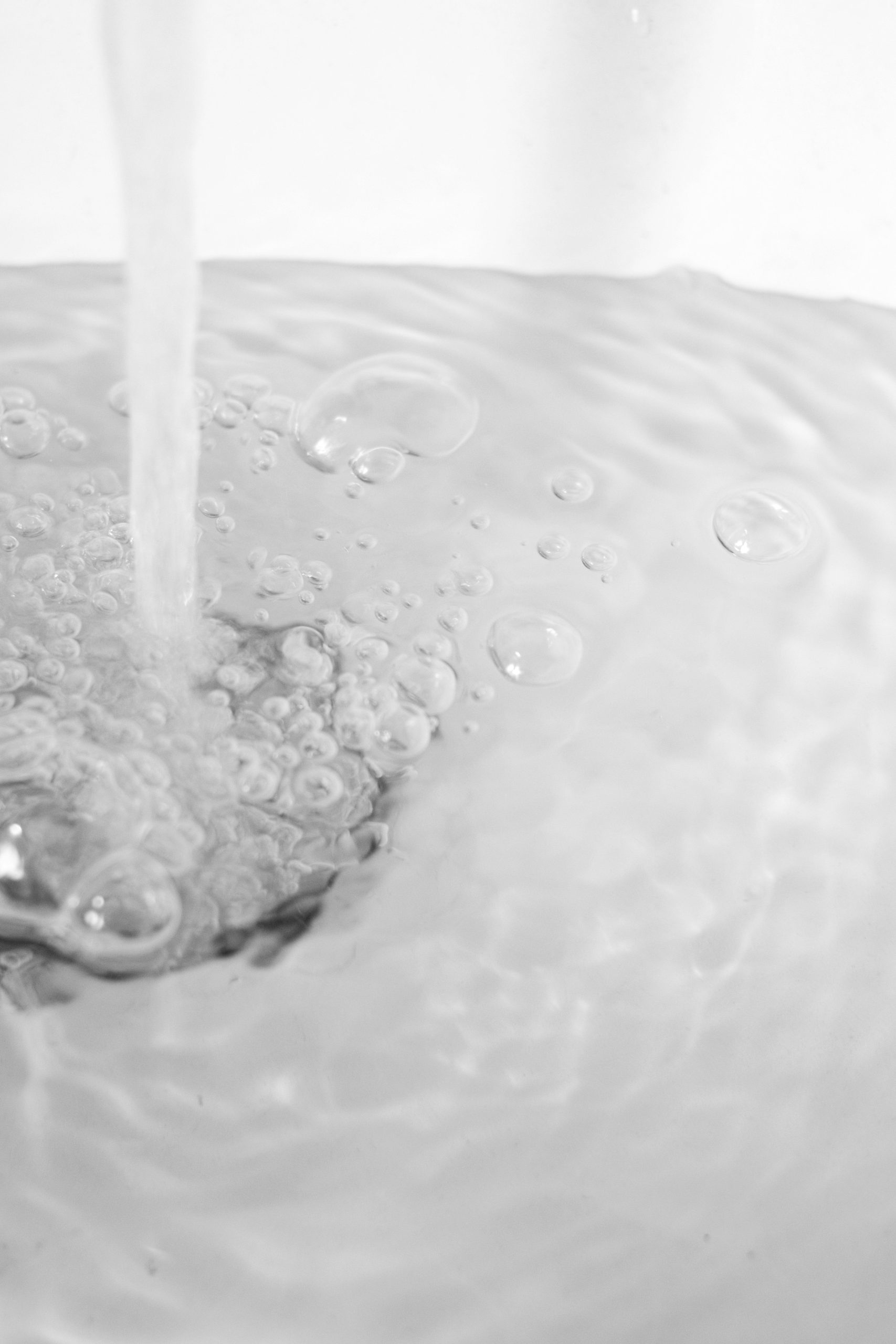
How much water goes through a tap in five seconds? Without measuring, a child might guess from the width or sound of the stream, but those clues do not tell you the volume. A short tap flow rate investigation turns a familiar Singapore kitchen or school sink into a measurement task. The question is not how little water a person should use to wash. It is how much water two tap settings deliver in the same amount of time. Use a few brief trials, catch the water, and give it an immediate second use if it remains suitable.
Compare two settings with the same catch time
Use a deep plastic container, a measuring jug marked in millilitres, a timer and a dry cloth. Choose a sink with an ordinary cold tap that an adult can operate. Do not adjust the plumbing or try this on a sensor tap. Make sure the container is large enough and the sink is clear. If the stream is strong, use a shorter catch time for both settings, or stop the trial rather than let the sink overflow. Keep the floor dry and handle only cold water.
Label two settings “gentle flow” and “stronger flow”. One person controls the tap and one runs the timer. Set the flow, then move the container under the stream as the timer starts. Pull the container aside at five seconds and close the tap. Turning the tap on from fully closed while timing would measure a startup period as well as the flow; this version is meant to compare fairly steady streams. If your start or stop is late, note it and repeat rather than pretending the catch time was exact. Keep the container position and timing routine the same in both trials.
Turn volume into a rate with the right units
Set the measuring jug on a level surface and pour in the collected water. Read the scale at eye level, not from above. If the jug has only large markings, keep the comparison approximate. Suppose the gentle run collects 300 mL in five seconds and the stronger run collects 450 mL in five seconds. Dividing each volume by five gives 60 mL per second and 90 mL per second. Those numbers are sample results, not an expected flow for Singapore homes. The first one says that 60 mL, on average, was collected per second during that brief interval.
Repeat once at each setting to see whether the pattern holds. If the second gentle trial gives 330 mL, the slight difference may come from the tap position, a late move of the container or a reading between marks. Keep both results. Comparing 300 mL in five seconds with 450 mL in ten seconds would be a different problem. The larger volume might be delivered at a lower rate, so you must divide by time before deciding which stream delivered more each second.
Separate observations from estimates about daily use
Ask a child what would happen if the gentle stream in the example continued for ten seconds at the same rate. The estimate is 600 mL, because the time doubles. But the trial does not say how long an entire household runs a tap, how constant the pressure is, or how much a person needs for any task. Keep that conditional wording: “If the flow stayed the same, then…” An estimate with an assumption is useful. A household water-saving claim that skips the assumption is not.
Finish by asking which number answers each of these questions: “What was caught?” and “How quickly was it delivered?” The first answer has units of millilitres; the second has millilitres per second. As a follow-up, compare two equal-volume examples and find the one that took fewer seconds, using numbers on paper rather than collecting more water. Once the child can explain why time belongs in the denominator, the lesson has done more than give them a conservation slogan.