A school heritage display can tell us a lot about the past, but a set that looks old is not the same thing as an untouched classroom. A useful Social Studies question is: which part of this display comes from the past, and which part was assembled later to help us understand it? Answering that question gives Primary 4 pupils a more reliable way to write an object label than simply calling everything “from the old days”.
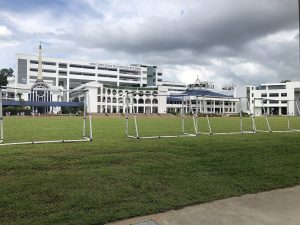
Qifa Primary School offers a good Singapore example. The MOE Heritage Centre describes a classroom-sized gallery with a wall designed to evoke older Khee Fatt School classrooms, alongside desks, cabinets and school materials. The centre also describes a projector and whiteboard used for learning in the space. A pupil can therefore recognise an educational display without claiming that the entire space has been preserved as it was.
Separate the object, the setting and the caption
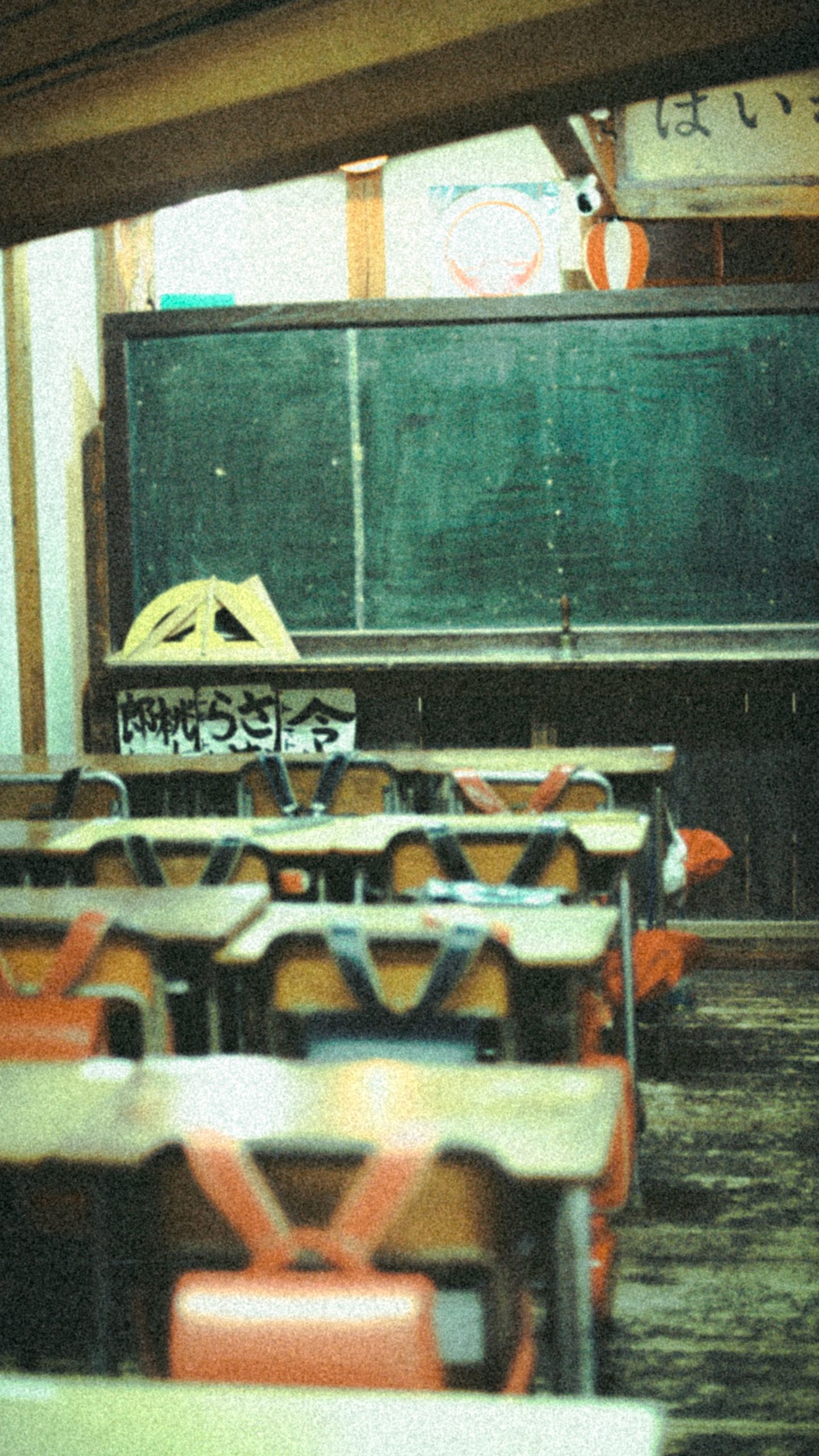
Imagine you are considering a desk shown by the wall. Start with what you can see: perhaps it has a wooden top, a narrow writing surface and a place to store books. Say “I can see” only about features you can actually identify from the view you have. If the image does not reveal a storage compartment clearly, leave it off your list. Next, ask whether the label gives a date, former owner or earlier location. If it does not, note that the desk’s exact history is not given.
Now think about the setting. A blackboard, several desks and other furnishings can help visitors imagine a classroom even if the display has been put together much later. An object can be old while its present arrangement is new. Similarly, a modern copy can show an older style without having been used by pupils at the time. The point is not to doubt everything; it is to follow each piece of information back to the thing that supports it.
Write a label that does not overclaim
Compare these two captions. “This desk stood in a Khee Fatt classroom in 1966” needs proof about the specific desk and year. Although the official school account records a Khee Fatt School opening in 1966 after the war and a renaming to Qifa Primary in 1985, those facts do not date individual furniture. A fairer caption would be: “A desk in a display designed to suggest an earlier Khee Fatt School classroom. The account gives no exact date for the desk.”
Next, let the pupil improve the caption by adding a useful observation. “Its writing surface is narrower than the group table we use today” is possible if they can actually compare the two. “Pupils could never work together at desks like this” goes beyond the objects. Furniture does not show all the things children and teachers did in a lesson. If the goal is to find out how pupils worked, look instead for teachers’ accounts, pupils’ recollections or photographs showing a lesson in progress.
Test the same skill with a familiar object
Set out an old pencil case and a current exercise book on a home table. Put a handwritten note above them: “School desk, 2003.” Ask your child what the note claims and what evidence would support it. A date printed on the inside cover of the book may show when that copy was produced, but it cannot date the pencil case. If the note actually means “A desk set up today to show what someone remembers using in 2003”, it should say so.
Finally, rewrite the label together in three short sentences. Name the object and one visible feature. Explain who arranged it, if known, and why. Record any important unknown, such as the exact year it was used. This works at home or with published gallery images; nobody needs to take an object out of a case or assume the school display is open for walk-in visits.
Use the same check on the next gallery caption. Can another reader tell which information came from the object, which came from a record, and which is an interpretation? If so, the label helps visitors learn without blurring those differences.